Endgame
Frost, Destro, and Shadow Are Being Tuned Around the Same Cleave Problem
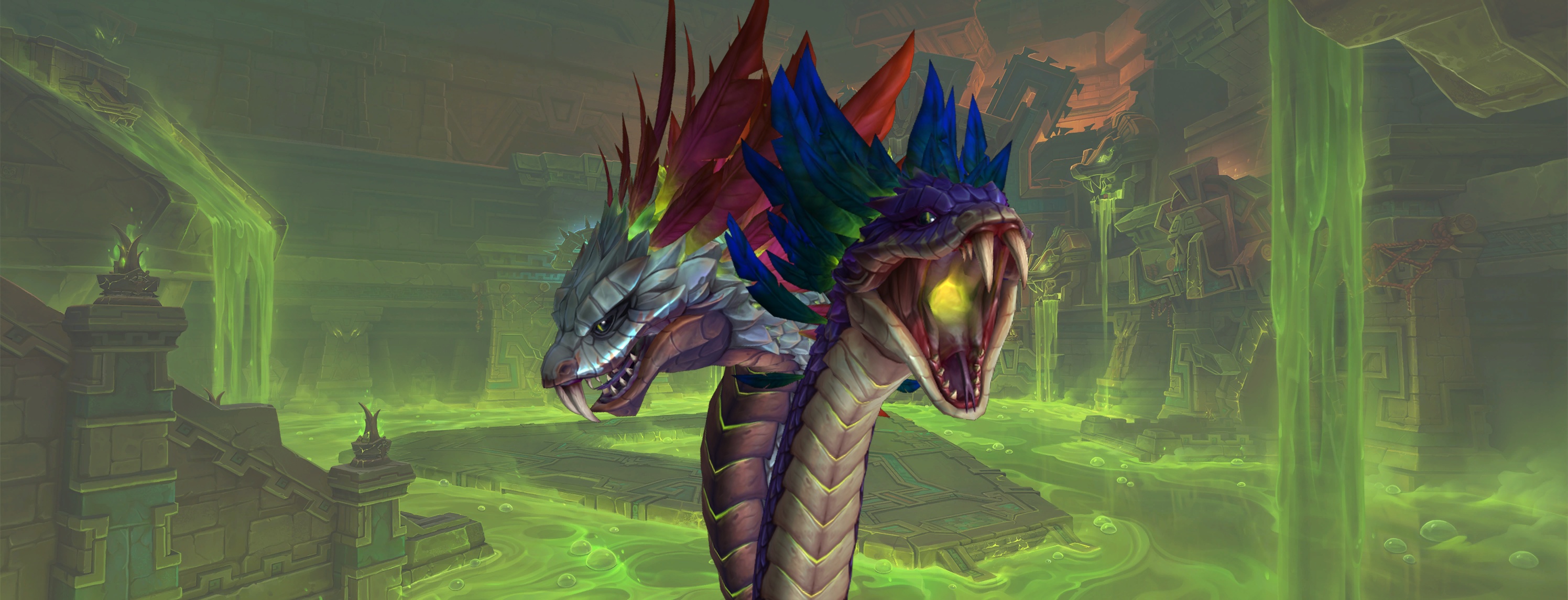
Blizzard cut Frost's second-target hits, Destruction's Havoc copy, and Shadow's Void Volley package on July 31. Twin Fangs will test whether Season 2 preserved three useful damage profiles—or flattened them to avoid a roster cliff.
The most revealing sentence in the July 31 PTR notes appears three times in different clothes.
Frost Mage's two-target cleave was “slightly higher” than Blizzard wanted. Destruction Warlock should still shine on two targets, but its edge needed to shrink. Shadow Priest was cut because its spread cleave was ahead of target.
Blizzard is trying to preserve specialization without letting one target count decide a raid roster. That is a good goal. It is also harder than the notes make it sound, because these three specs do not cleave in the same way—and one of the stated explanations does not neatly describe the spell being nerfed.
The Twin Fangs will be the obvious live test. Both serpents are active, their health must be managed, and the survivor gains stacking damage after the first dies. Blizzard has not said that encounter caused these changes. It has created exactly the fight where the result will be impossible to hide.
The same tuning goal hit three different tools
| Specialization | July 31 reduction | Compensation | Identity under test |
|---|---|---|---|
| Frost Mage | Splitting Ice sends Frostbolt and Flurry at 50% to the second target; Fractured Frost sends Ice Lance at 50% | 3% overall damage; separate set-bonus reductions also landed | Permanent two-target cleave bought through talents |
| Destruction Warlock | Havoc copies 50% instead of 60% | Soul Fire +45%; Chaos Bolt +5% | A planned copy window with target control |
| Shadow Priest | Void Volley -10%; four-piece proc 125% to 100%; Focused Outburst 15% to 5% | No matching baseline increase in this note | A Voidform cleave package Blizzard describes as spread cleave |
This is why the three red-number packages cannot be ranked by headline size.
Frost pays talent points to cleave core spells. Destruction prepares Soul Shards and chooses a Havoc target for a timed window. Shadow spends limited Void Volley uses during Voidform and gains more through its set. The useful question is not which bar fell furthest. It is whether each tool still solves a recognizable encounter problem.
Frost's risk is losing the reason to take the talents
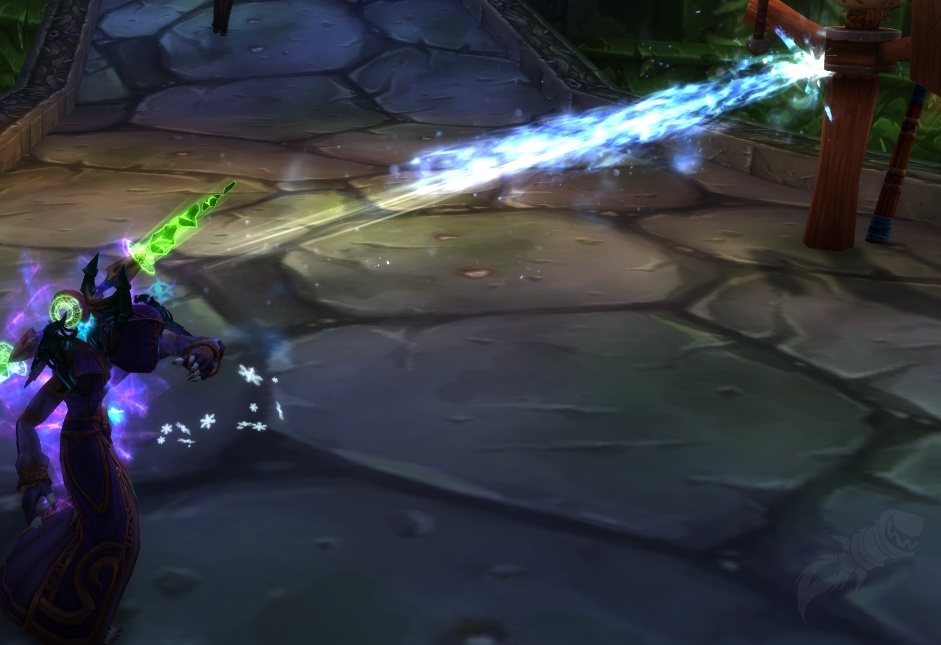
Current Frost raid guidance swaps single-target value into Splitting Ice and Fractured Frost for light-cleave fights. July 31 reduced Frostbolt and Flurry's second-target effectiveness from 80% to 50%, and Ice Lance's from 100% to 50%.
Those are large coefficient changes. They are not a clean estimate of Frost's total two-target loss.
Shatter remains a separate part of the profile, the 3% aura buff applies broadly, and the Season 2 set changed in the same pass. Current community estimates of the net loss disagree because they make different assumptions about build, hero tree, Shatter share, and target timeline. Until the build is logged cleanly, publishing one percentage would turn an argument into a fact.
The more durable concern is opportunity cost. If Frost gives up single-target talents to buy light cleave, the second target needs to repay those points. A cleave talent that produces only incidental damage preserves convenience, not identity.
Test Spellslinger and Frostfire separately. Compare their light-cleave setups against their single-target alternatives. Record main-target damage, second-target damage, and the amount lost when one target disappears. Frost does not need to nearly double its output. It does need a reason to be the Mage spec chosen for two persistent enemies.
Destruction's ten-point Havoc change is not a ten-percent nerf
Havoc now copies 50% of eligible single-target damage instead of 60%. The copied portion fell by one-sixth; the specialization did not lose ten percent of its damage.
Soul Fire rose by 45% and Chaos Bolt by 5%. Those stronger primary casts can also feed the smaller Havoc copy while the mark is active. The result depends on spell mix, shard preparation, Havoc uptime, target life, and whether the Warlock can keep casting.
That is why the Destruction reaction is less useful when it stops at “Havoc nerf.” The window still offers something Frost's passive split does not: explicit target control. A Warlock can mark one serpent, attack the other, and redirect or stop the copy when the raid's health plan changes.
Twin Fangs does not reward maximum mirrored damage at all times. It rewards damage that arrives on the correct target without wasting the Soul Shards prepared for the survivor. If the new multiplier keeps that control valuable while the buffed spells protect single-target bosses, the profile survives.
Shadow's “spread cleave” explanation needs another pass
Blizzard said Shadow was too strong in spread cleave, then reduced Void Volley and two bonuses that amplify it.
Void Volley's native spell is not a long-range spread tool. It fires ten bolts into the main target and one at enemies within 10 yards of that target. By itself, that is nearby or stacked cleave. Shadow can reach separated enemies through the rest of its kit, but the July 31 bullet does not explain which interaction turned this spell package into the spread-cleave outlier.
That mismatch is more than wording. It makes the retest unclear.
If the target was Voidform burst on a stacked council, measure that. If the target was damage transmitted through multi-target setup, identify the actual link. If Shadow's single-target window falls because a nearby-cleave spell was used as a proxy for a broader spread profile, the note will have solved the wrong layer.
Shadow testers already liked the control of limited Void Volley charges: they can spend the casts when adds matter instead of firing strictly on cooldown. The Season 2 four-piece adds another use. That decision-making is worth preserving even if its throughput needed tuning.
The clean matrix is one target, two stacked targets, and several separated targets. Until those three tests show where the loss landed, “spread cleave nerf” is a label, not an explanation.
Two-target bosses create a roster cliff
The fear behind this tuning pass is familiar. A permanent second boss is not simply an extra enemy. Some specs gain incidental damage; some copy most of a single-target rotation; some spread resources or debuffs; others gain almost nothing.
If an encounter is tuned around the best specialists, ordinary single-target specs can look unrosterable. If Blizzard pulls every specialist down until the combined meters match, the game loses the uneven profiles that make raid composition interesting. The balance point is not identical output. It is a useful niche with a price.
That price can be talent points, setup time, target restrictions, weaker pure single target, or lost value when enemies separate. The niche becomes a problem when it gains enormous free damage with no meaningful trade.
The July 31 notes show Blizzard trying to narrow that edge before Season 2 opens. They do not prove the edge is now fair, and they do not prove Twin Fangs prompted the changes. The encounter supplies the audit.
Combined damage is the wrong Twin Fangs score
When one Fang dies, Uncoiled Wrath causes the survivor's damage to increase every four seconds. The health split before that death decides how long the dangerous finish lasts.
A cleave specialist can help by bringing both bosses toward the planned breakpoint. The same player can hurt progression by overdamaging the wrong serpent, forcing a damage stop, or entering the survivor phase without cooldowns.
For raid testing, track:
- damage to each Fang separately;
- the health gap before the first death;
- damage lost when cleave must stop;
- cooldowns and resources available for the survivor;
- single-target cost on the other bosses in the raid.
That last row prevents a council fight from writing the entire roster. A spec can be excellent on Twin Fangs and still be a poor progression choice if its compensation fails everywhere else. The ideal specialist bends the encounter without becoming a passenger after it.
Treat every pre-July 31 ranking as a retest list
Frost's split coefficients, Destruction's Havoc copy, and Shadow's Void Volley package all moved. Old PTR bars no longer answer the launch question.
Frost players need talent-versus-talent comparisons, not one combined meter. Destruction players need new Havoc windows with the stronger Soul Fire and Chaos Bolt values. Shadow players need stacked and spread tests because the developer explanation is not precise enough.
Do not choose a Season 2 main from the previous build's outlier log. Use it to decide what to rerun.
Season 2 is healthier if Frost, Destruction, and Shadow keep different answers to multiple enemies. The balance target is not three identical bars. It is three profiles that remain useful, controllable, and costly enough that a raid can choose among them.
Twin Fangs will show whether Blizzard preserved those specialists or merely made the roster cliff harder to see.