Raiding
Three Ula'tek Mounts Per Kill Still Leave the Bench Waiting
Three Primeval Skyfriends can cover a fixed 20-player raid in seven Mythic kills. Real progression rosters are larger, reclears are not automatic, and a mount plan written after Cutting Edge is already late.
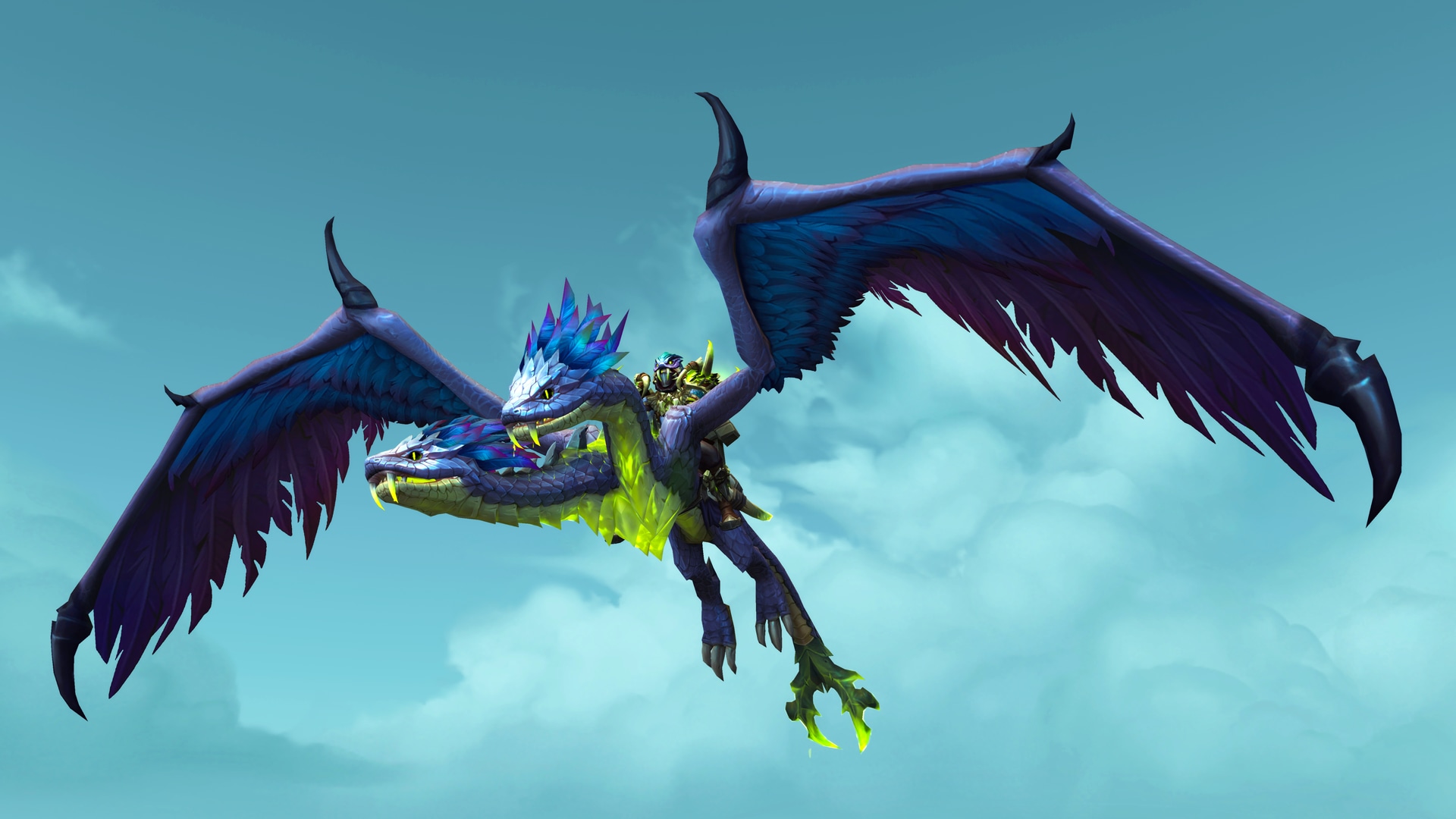
Mythic Ula'tek will drop three Primeval Skyfriend mounts every time she dies during Season 2.
For a fixed 20-player raid, that sounds like a solved problem. Three mounts per week means everyone can be covered in seven kills, with one mount left over.
Mythic rosters are not fixed groups of 20.
They carry a bench because people miss nights. They swap classes because encounters demand different tools. Trials arrive, veterans take breaks, and the player who sat for the first kill may have done more progression work than the replacement brought in for the final pull.
Three drops shorten the farm. They do not decide who gets to be present for it.
Seven kills is the best-case number
Blizzard raised current Mythic end-boss mount drops from two to three at the start of The War Within. The Season 2 announcement applies that policy directly to Ula'tek: defeat her on Mythic and three Primeval Skyfriends drop.
The arithmetic is simple enough to become misleading.
| Players the guild intends to cover | Perfect-distribution minimum |
|---|---|
| 20 | 7 Ula'tek kills |
| 21–24 | 8 kills |
| 25–27 | 9 kills |
| 28–30 | 10 kills |
That table assumes every mount reaches a different eligible person who still needs it. It also assumes the same roster remains active, every reclear happens, and no kill needs players from outside the coverage group.
The calculation is a floor, not a schedule. Community accounts from recent three-drop bosses show both ends of the range: one roughly world-550 guild covered its core, moved on to trials and sales, and eventually ran out of eligible recipients; other raiders describe first reclears that still felt like progression. The drop count was the same. The reliability of the kill was not.
A 24-player progression roster does not become a 20-player roster because the boss died. Covering all 24 takes at least eight kills. If two raiders leave after Cutting Edge and two recruits join for reclears, the definition of “all” has already changed.
The first kill is where vague policies become personal
Boss loot can be evaluated as progression power. The mount cannot.
There is no raid-DPS argument that resolves whether the long-serving backup tank, the newly recruited Warlock, or the officer who built every assignment deserves access first. The question is about membership, attendance, and the promises the guild believes it made.
If those promises exist only in officers' heads, the first mount week will expose the differences.
One raider may assume anyone present for progression is covered. Another may assume only the 20 players in the kill are eligible. A trial may hear “we mount-farm after CE” and reasonably think that includes them. A benched player may discover that being available all tier did not create any reclear priority.
None of those expectations is absurd. They are incompatible.
The policy needs to be visible before Ula'tek dies, ideally before progression reaches her.
Progression contribution and kill attendance are different
The cleanest rule starts by separating progression contribution from presence on the successful pull.
A composition bench is part of the raid team. If a player attended the learning nights, maintained the character, and sat because the kill needed a different immunity, buff, or damage profile, the bench did not opt out of progression. Treating that player as a stranger on the mount farm punishes the roster flexibility that made the kill possible.
That does not mean every person who appeared once receives permanent priority. It means the guild should define a coverage roster using criteria that can be checked:
- joined before a stated date;
- maintained the agreed attendance rate;
- remained available when benched;
- completed required character preparation;
- is still an active member for reclears.
The criteria should be boring. Boring rules survive the night when three exciting items appear.
The actual kill group will still be limited to 20. Coverage policy decides how the guild rotates eligible players into future kills without pretending the first 20 did all the work alone.
Reclear strength sets the real pace
The first Mythic kill is often the ugliest successful version of a boss. Repeating it the following week can be easier with better gear and a proven plan, but it is not guaranteed.
Final bosses punish casual rotation. Swapping several experienced players at once can remove assignment memory, defensive timing, or the specific utility that stabilized the kill. A guild that promises four new mount candidates every week may discover that it can no longer produce the three mounts.
The safe rotation is smaller:
- 1. Keep the encounter's critical assignment core stable.
- 2. Rotate covered players out after they receive the mount.
- 3. Bring uncovered players in where their role and preparation preserve the kill.
- 4. Increase the rotation only after the reclear is genuinely controlled.
This may feel slower than seating the 20 strongest characters until their mounts are finished. It is faster than reprogging Ula'tek with half a new team and losing the week.
Reclear policy also needs an escape clause. If the boss consumes an entire raid night again, progression stability temporarily outranks perfect rotation. Say that before it happens, then resume the rotation when the kill is secure.
The same policy needs an end date. Recent final-boss mounts have remained guaranteed long enough for groups to return in stronger next-season gear, but easier damage checks do not put an abandoned farm back on the calendar. A benched raider is not “covered eventually” unless the guild has committed to keep scheduling Ula'tek.
Do not invent control the loot system has not promised
Blizzard has confirmed the number of mounts, not every live distribution detail in the announcement.
Players farming recent Mythic end-boss mounts report that the game assigned them among eligible people in the kill rather than handing officers three ordinary items for loot council. That is useful precedent, not confirmation of Ula'tek's live implementation. Ula'tek is still on the PTR, so a guild should not publish a detailed “first mount goes to” ladder until live kills prove that the raid can control the recipient.
The roster plan matters either way.
If the mounts are assigned automatically, the guild controls who is present and eligible, not which of those people wins. If the live system permits a tradable or roll-based decision, the guild needs an additional distribution rule. In both cases, a hidden officer priority list is the worst option.
Use precise language:
- “The active progression roster will be rotated through reclears” is a promise the guild can keep.
- “Everyone will have the mount in seven weeks” assumes perfect kills, perfect attendance, and a fixed group that does not exist.
- “Mounts are loot-council priority” may describe a control the live item never gives.
Promise the process, not the lucky calendar.
Trials and late recruits need their own sentence
Trials create the hardest edge because they can be necessary for a reclear without yet belonging to the roster that earned the first kill.
Excluding every trial forever is a good way to recruit someone into a guild that has already announced they are second-class. Giving a new trial equal mount access on day one can also break a clear commitment to raiders who spent months progressing the boss.
A workable rule uses a date or status transition:
- players who were active progression members at first kill enter the initial coverage group;
- trials become eligible after promotion;
- late recruits enter after the initial group, unless they are filling a permanent vacancy the guild explicitly chooses to treat differently;
- no one loses eligibility merely because officers benched them for composition.
The exact order can vary. The important part is that the trial hears it during recruitment, not after their first Ula'tek kill.
Sales begin after the guild knows what “covered” means
Three guaranteed mounts make final-boss sales tempting. They can fund consumables, guild repairs, and future progression.
They can also turn a roster promise into a transaction while an eligible raider remains outside.
Set the sales threshold in advance. That might be full coverage of the original progression roster, a vote after every active raider has been offered a reasonable number of kills, or a later date when the farm would otherwise stop. Whatever the guild chooses, it should not discover a buyer before it discovers the benched member who still needs the mount.
There is also a practical ceiling. A buyer occupies one of 20 seats. Too many buyers or carries can destabilize the reclear that creates the product. The three-drop policy improves the economics; it does not remove the encounter.
The mount's appearance is not the policy
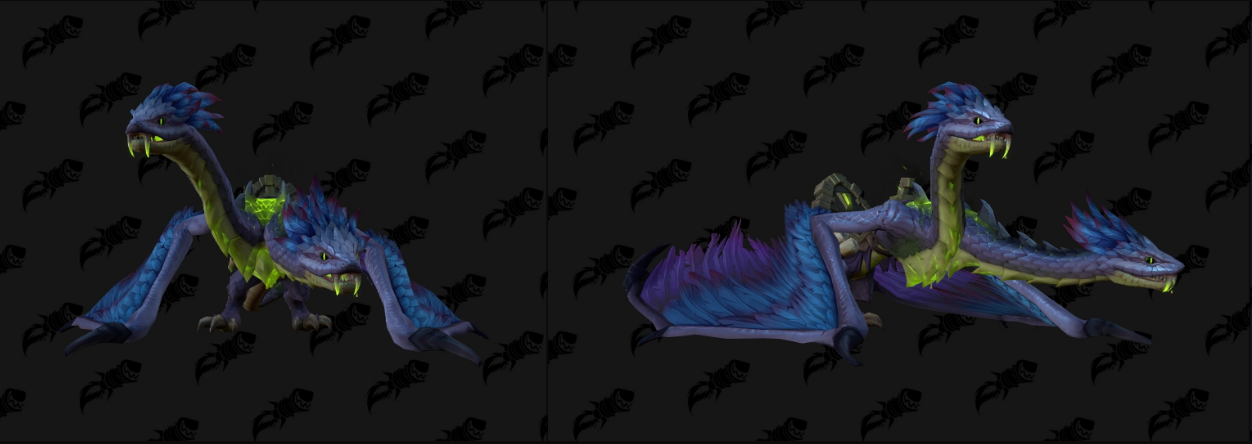
Primeval Skyfriend is a skyfiend from the Venomous Abyss, and early reactions to its PTR model are split. Icy Veins presents Skyfangs positively as the first rideable wind-serpent family in WoW. The comments on Wowhead's item page are much harsher: several call the rig dated or the model too simple for a Mythic end-boss reward.
That argument will affect how urgently individual raiders want it. It should not affect whether the guild keeps its word.
A player who does not care about the mount can voluntarily pass on coverage if the system permits it. Officers should not decide that someone “probably does not want it” because they criticized the model in Discord. Account-wide cosmetics are permanent; opinions and transmogs change.
Ask for an explicit opt-out, and make it reversible until the farm ends.
Write the plan while Ula'tek is still alive
A complete policy fits in one short message:
- who belongs to the initial coverage roster;
- how attendance and composition benches are treated;
- when trials and later recruits join;
- how many players can rotate without endangering the reclear;
- whether the live loot system is random, roll-based, or controllable;
- when sales or outside buyers can begin;
- what happens if the boss stops dying reliably.
Three mounts per kill is generous compared with the old two-drop rule. It can cover a stable raid surprisingly quickly and give guilds a reason to keep reclearing after progression gear loses value.
Its best-case math is not a substitute for leadership.
The Primeval Skyfriend farm will feel fair when raiders can predict the process before the first mount drops—even if none of them can predict which three names appear on the first kill.