Raids
Venomous Abyss Gets Its First Raid Buff on September 15. Don't Wait for It.
Fury of the Dead is expected to add 1% damage and healing per week, beginning four resets after the raid opens. That gives progression a calendar—but +15% damage is not 15% less boss, and no rank fixes a failed mechanic or a broken encounter.
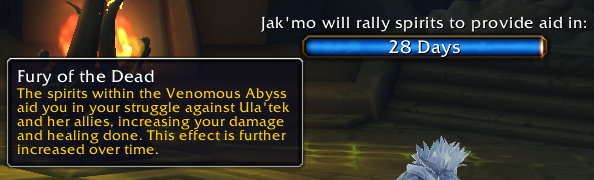
The Venomous Abyss has an expiration date on its original throughput checks.
On September 15, four resets after the raid opened in North America, Fury of the Dead is expected to begin increasing player damage and healing inside the instance. Current data points to a first rank of 1%, another percentage point each week, and a cap of 15%, following Midnight Season 1's model.
Only the start date and the existence of a similar progressive system are firm enough to plan around today. Blizzard has not published the complete quest flow, starting rank, cadence, or cap. Those details come from current game data and the prior-season pattern.
Even with that caveat, September 15 changes how a raid leader should read the next month. It creates an unbuffed progression window, then introduces a predictable tailwind. The useful question is not whether the raid becomes easier. It is which problems the buff will solve, which it will merely hide, and which it cannot touch.
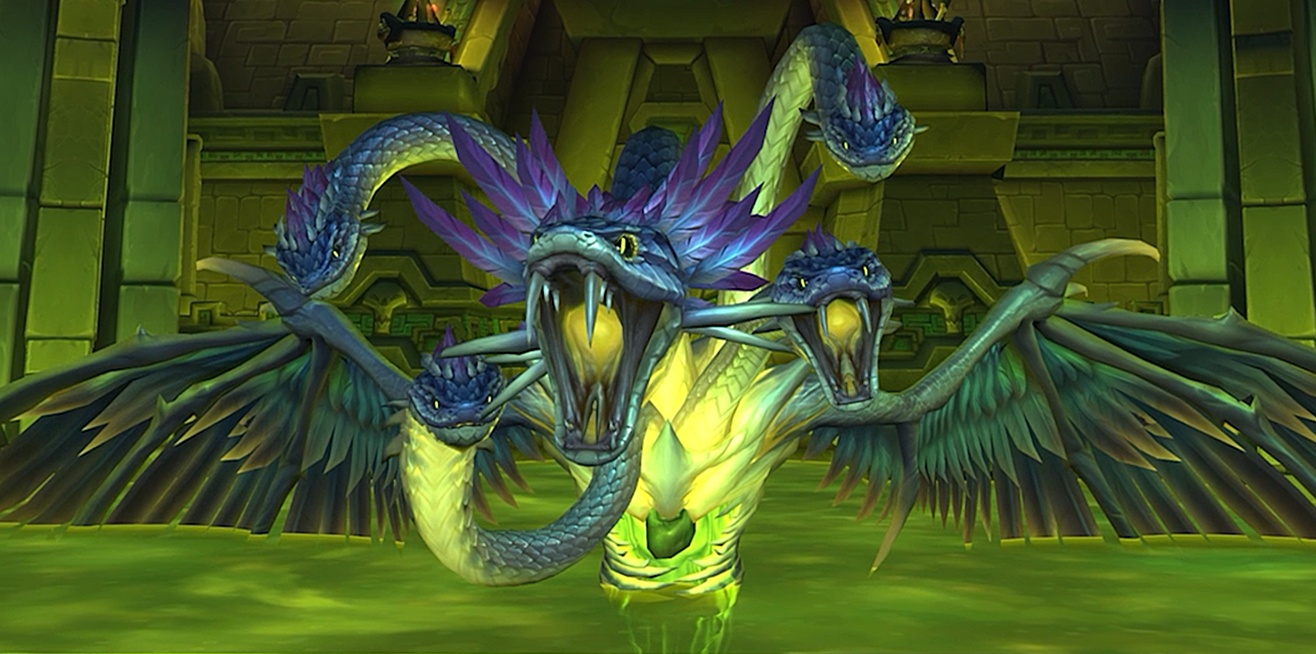
Four resets preserve the original difficulty
The raid opened on August 18 with Normal, Heroic, and Mythic available together. The first expected Fury of the Dead rank arrives September 15.
That gives the Race to World First and the fastest guilds four weekly clears without a universal damage-and-healing multiplier. It also gives every other roster four resets to build tier sets, upgrade weapons, learn the fights, and find out where progression actually stalls.
This gap answers part of an old argument about automatic raid nerfs. Some raiders want a stable version of Mythic so later groups can test themselves against the same difficulty as early clears. Others prefer a published decline because roster logistics already consume enough of the season and unpredictable manual nerfs make planning worse. Four unbuffed resets preserve an early benchmark without asking every guild to remain on that benchmark forever.
The date matters more than the eventual cap for most groups. A Heroic roster reaching The Coiled Altar on September 8 has one more unbuffed week to solve it. A Mythic roster arriving at a hard damage check on September 15 begins that wall with an extra point of throughput. A group deciding whether to add a raid night should know whether it comes before or after the first rank.
That is still not an argument to wait. Four resets contain four weeks of loot, Vault choices, tier acquisition, and practice. A boss killed before the buff is removed from every later weekly schedule. Delaying progress to collect passive power gives up more active power than it saves.
A 15% damage buff does not remove 15% of the fight
The number on a player buff and the equivalent change to a boss health bar are not interchangeable.
Suppose a raid deals 100 units of damage per second to a boss with 10,000 health. The pure damage check lasts 100 seconds. Add 15% damage and the raid deals 115 per second, finishing in about 87 seconds. The time removed is roughly 13%, not 15%.
The same relationship applies at every rank:
| Fury of the Dead | Pure health-check time removed |
|---|---|
| +1% damage | 1.0% |
| +5% damage | 4.8% |
| +10% damage | 9.1% |
| +15% damage | 13.0% |
Real bosses are not target dummies. Immunities, forced movement, intermissions, add priorities, damage stops, and phase transitions all change the result. A 180-second pull does not automatically become 171 seconds at +5%. The table isolates the raw health component so raid leaders do not promise that next week's rank removes more fight than it can.
The useful question is whether the gain crosses an ability timer. Removing six seconds from a phase can be worth far more than six seconds if it skips a dangerous overlap. Failing to cross that timer can make the same rank feel invisible.
Healing improves. Survival does not.
Fury of the Dead is expected to increase healing as well as damage. That helps sustained raid damage, heal absorbs, recovery after mechanics, and healer mana by shortening fights.
It does not directly make a character harder to kill.
A player who dies from full health to an unmitigated hit is still dead. A missed soak still fails. Two Fragments of Malacrass erased at the same time still stack their danger. Spectral Coils using the wrong group-size scaling still required a direct hotfix because 1% more healing could not make a broken multiplier reasonable.
Launch-day discussion supplies even clearer examples. A blocked NPC that prevents a raid from starting, a broken lockout, or a character disconnected by a bug receives nothing from Fury of the Dead. Nor does a Normal encounter tuned far above its place become healthy merely because everyone can outgear it a month later.
This is the boundary between a progressive buff and encounter maintenance. The buff lowers the output needed for a correct, functioning pull. It does not make an incorrect pull correct or a broken encounter function.
If the group is wiping with the boss alive and every player standing, more throughput may solve the wall. If players die before the final minute, check the death sequence, defensive assignment, positioning, dispel, soak, or add control before circling September 15 on the calendar.
Make each rank a small weekly review
A scheduled multiplier creates a useful control, but raid leaders do not need another live dashboard to babysit.
Save one representative clean pull from the final unbuffed week. Between pulls or after the raid, compare the phase timing with a similarly clean pull after the next rank. Mark the exact ability the group hopes to skip. Keep deaths and mechanical failures separate from throughput wipes. That is enough to show whether the rank bought the expected margin.
The distinction matters because leaders are already carrying more manual diagnosis after Midnight's addon and combat-data restrictions. Current feedback repeatedly asks for a better death recap in the base UI. Fury of the Dead should not become an excuse to add a spreadsheet to every wipe.
One quick review can still catch a larger planning change: passive power may invalidate the cooldown sheet. A two-minute ability planned for pull and 2:05 may never get the second cast once the phase ends at 1:58. Healers can hold a major cooldown for an overlap that the raid now skips. More power rewards replanning; it does not remove the need for a plan.
Uniform power cannot replace targeted nerfs
The first raid day demonstrated the difference.
The Coiled Altar received large post-transition health reductions. Ula'tek's Spectral Coils stopped scaling its damage with group size on Normal and Heroic because the mechanic's mitigation did not justify that extra multiplier. Those were encounter-specific corrections to health and scaling.
Fury of the Dead would have been a poor substitute for either. A uniform damage buff does not fix group-size punishment. A healing buff does not reduce a fragment's damage or repair a mechanic that scales incorrectly. It cannot reassign a pass-or-fail mechanic or make a hard-to-read effect clearer. Waiting several weeks for passive power would leave early groups playing a version Blizzard had already decided was wrong.
Lead encounter designer Taylor Sanders described the Season 2 system as a weekly leg up, not the end of manual tuning. The sensible expectation is both: targeted changes when an encounter is mechanically or numerically out of line, and a predictable soft nerf that lets more rosters progress as the tier ages.
Put September 15 on the calendar, not on the strategy sheet
For a raid leader, the date belongs beside resets, absences, and expected tier-set breakpoints. It should not become the answer to every hard pull.
Use the unbuffed weeks to establish clean assignments and identify the real wall. Use the first ranks to shorten that wall, move cooldowns, and test whether an extra phase cycle disappears. If a mechanic still kills the group, solve it or wait for a targeted change; the healing number will not turn into armor.
The strongest groups will clear before Fury of the Dead matters. Many good groups will clear because gear, execution, and the buff finally meet on the same reset. Both outcomes are part of the system's design.
September 15 is not the day progression starts. It is the day the raid begins admitting that progression cannot stay frozen forever.